
AI Video Production
What Scorsese Put on Display Wasn't a Tool. It Was a Way of Working.
Martin Scorsese's work with Black Forest Labs shows AI's real creative value: a responsive, directed process led by human judgment.
Summary
What this article covers
Scorsese's AI storyboarding session matters less as a celebrity endorsement than as a clear view into the process: describe, produce, react, and refine until the work begins to match a human creative vision.
Key Takeaways
Direct answers
- Scorsese's reel shows AI as a directed creative process, not a button that replaces judgment.
- Commercial AI production depends on iteration, taste, responsiveness, and technical control.
- Luxury leaders such as LVMH are integrating AI as another craft tool while keeping human direction at the center.
Martin Scorsese has joined an AI company as an adviser. To announce this new partnership, the legendary director posted a short reel on social media showing how he works with generative AI. The video itself was simple. The implications were not.
The man who once said that Marvel films were "not cinema" is now using generative tools to storyboard and develop ideas for his next picture. That alone is certainly noteworthy. But it's not the biggest takeaway.
The video validates the emerging role these technologies will play in the creative process. And that validation carries weight because it comes from Martin Scorsese.
But the endorsement is the smaller point.
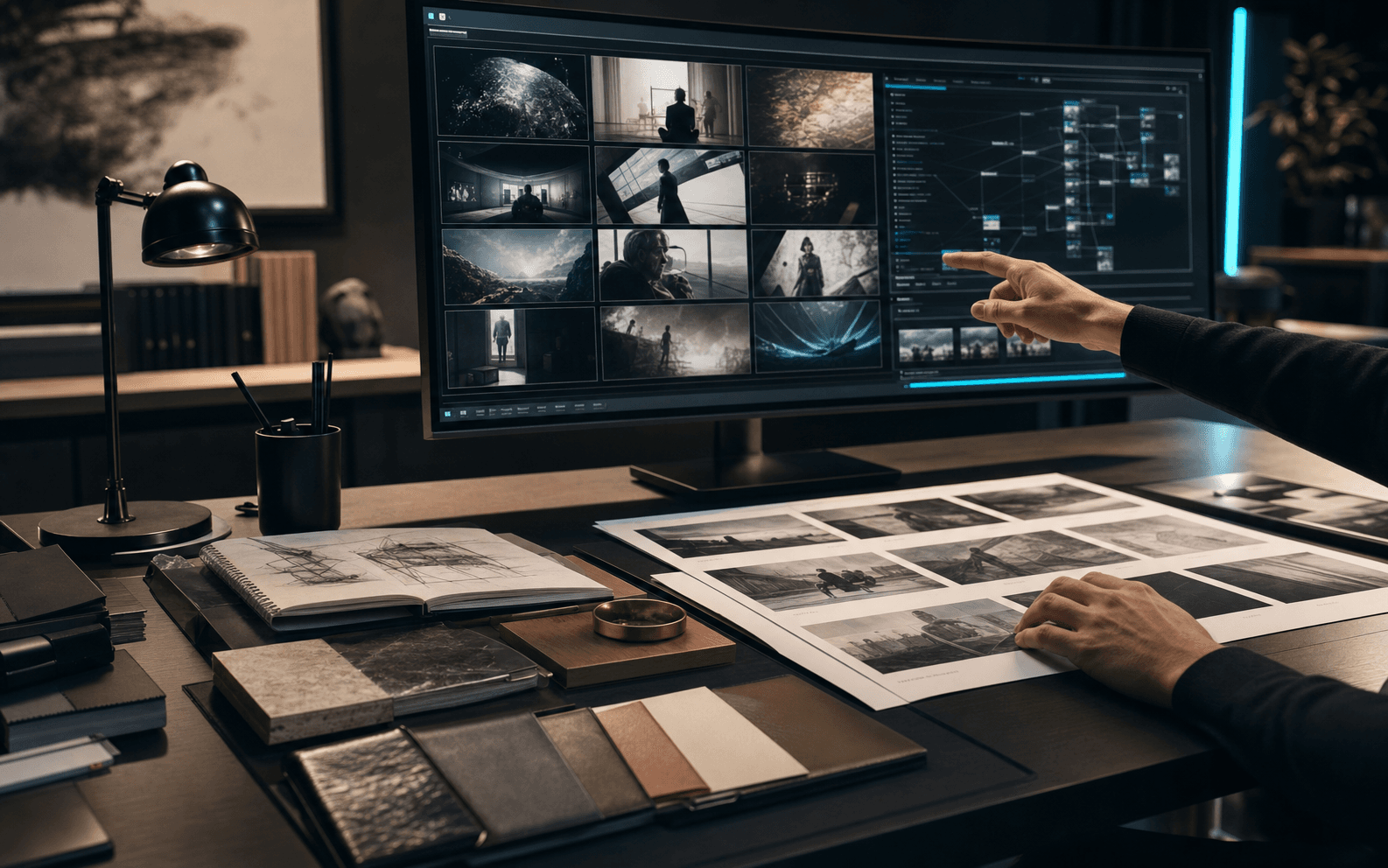
The more important thing the reel does is show what engaging with these tools actually looks like. Scorsese isn't just pressing a button and accepting whatever comes back. He's working with the team at Black Forest Labs, giving them context, describing what he sees, reacting to outputs, refining ideas, and iterating in real time until the work begins to resemble the vision in his head.
The process is collaborative. It is responsive. It is directed.
The reel frames the process as a creative endeavor. That matters because many people's understanding of AI has been shaped by what they're constantly inundated with on social media: amusing prompts, novelty images, strange videos, and experiments created for entertainment. They see that output and use it to define the broader universe of AI-enabled production.
But there is a significant difference between experimental generation and work that clears the bar for commercial utility. The latter demands direction, creativity, judgment, iteration, and technical mastery. It requires knowing what the tools do well, where they fail, and how to navigate their instability to produce something precise.
What Scorsese put on display is the difference between using a tool and directing one.
That distinction is also the foundation of our production model at YBA. Everything we create begins with a client's guidance. We bring ideas and creative perspective, but the process itself is responsive. The brand directs. We produce, react, edit, and refine in real time.
Describe. Produce. React. Refine. The work emerges through iteration.
Across the industries we serve, we regularly encounter founders, marketers, and executives who approach the subject of AI with understandable skepticism. They're rightfully protective of their brands, their businesses, and the work that represents them. And often, their perception of the technology has been formed by the same shallow examples they see online.
But once they experience the process, the conversation shifts. The tool starts to matter less. The process starts to matter more. They see the responsiveness. The ability to explore ideas in real time. The ability to iterate, react, and refine without waiting weeks for another round of drafts. They begin to see what Scorsese puts on display in his reel: a process capable of bringing what's in his head out into the world.
The economics and efficiencies these technologies provide are very real, and they're compelling. But the value isn't just cheaper and faster production. It's a more responsive creative process that expands the way ideas can be explored, refined, and expressed in real time.
This realization appears to be happening at the highest levels of luxury as well.
Last week, The Observer reported that Bernard Arnault runs a weekly AI design session with a young operator sitting beside him, designing products and exploring ideas that can eventually be made real.
This process isn't isolated to Arnault's office. These technologies are being integrated system-wide at LVMH, in a very similar way to what Scorsese demonstrates in his video. At Louis Vuitton, artisans use AI to digitally model leather hides and propose cutting patterns. Designers use the tools to test colors, visualize materials, and create assets. Celine has developed an internal AI agent to support its teams, and LVMH has gone so far as to establish an AI Factory dedicated to embedding these capabilities across the group. This is not experimentation at the margins. It is the deliberate integration of the technology into how the company creates, explores, and operates.
In our experience, customer-facing luxury brands tend to be particularly thoughtful, and often defensive, when it comes to adapting AI into their workflows. Yet here we have the company that, in many respects, sets the tone for modern luxury weaving these technologies into the fabric of its business, not to replace the craftsman, but to give the craftsman another tool. Another way to explore. Another way to bring an idea into the world. Nothing is being sacrificed. The process is simply becoming more capable.
The connection between Scorsese and Arnault isn't simply that they're both using AI. It's that both have apparently arrived at the same way of working with it.
The AI narrative is often viewed through the lens of the technology. But that technology does not execute itself. The iPhone you're using to read this article contains more computing power than existed in the world when we sent men to the moon in 1969. Until you picked it up, it was just a cool-looking paperweight.
These platforms are no different.
They are powerful, unstable instruments that require judgment, experience, and skill to direct. Knowing where they break, where they drift, and how to guide them toward a precise result is a discipline in itself. That navigation is the craft. And it is not a commodity.
The tools will continue moving deeper into the production chain. They will become more capable every month.
But what Martin Scorsese put on display wasn't a piece of software. It was a way of working.
Anyone can open the tool. The people who know how to direct it are the difference.
Tools don't create. People do.
FAQ
Common questions
What did Scorsese's Black Forest Labs reel show?
It showed a working storyboarding session where Scorsese provided context, reacted to outputs, refined ideas, and used AI as part of a directed creative process.
Why does this matter for commercial AI production?
The article argues that commercial work requires more than access to a tool. It requires direction, judgment, iteration, and technical skill to produce precise results.
How does the LVMH example connect to Scorsese?
Both examples point to the same operating model: AI becomes useful when experienced people direct it as part of a responsive creative workflow.